The Reproductive Equity Action Lab (REAL) produces actionable resources.
From peer reviewed manuscripts and media interviews, briefs and plain language summaries, to social media posts and podcasts — we’re committed to sharing what we learn at REAL. Dissemination is core to our mission to support evidence-based, transformative policies.

Peer Reviewed Manuscripts
We publish our research as journal articles. These are our primary means of sharing what we learn with other scientists and clinicians.

Media Interviews & Podcasts
We love any opportunity to share our work, but talking about our research might be our favorite. Email us about media inquiries, please.

Reports & Briefs
We produce clear products on our research to share back with community, policy makers, and our supporters. Need a resource you think we’re well positioned to create? Email us.

Peer Reviewed Publications by Topic
Latest from REAL

COMMENTARY
Sociolegal Reproductive Coercion: A framework for understanding structural pressures on reproductive decision-making

Journal ARticle
“Another person who loves you”: Reconceptualizing doula care by centering cultural competence in the support of Black birthing people

Journal Article
Changes in facility-based abortion care among Texas resident minors and young adults after a 2021 abortion ban: September 2020-May 2022

JOURNAL ARTICLE
Penalizing parenthood and perpetuating poverty: Black parents’ perspectives on Wisconsin’s Birth Cost Recovery policy

Journal ARticle
“It should have been my decision”: A mixed methods investigation of contraceptive coercion among US patients with and without disabilities

Journal Article
Adolescents’ and young adults’ receipt of person-centered contraceptive counseling
Reports & Briefs
2025
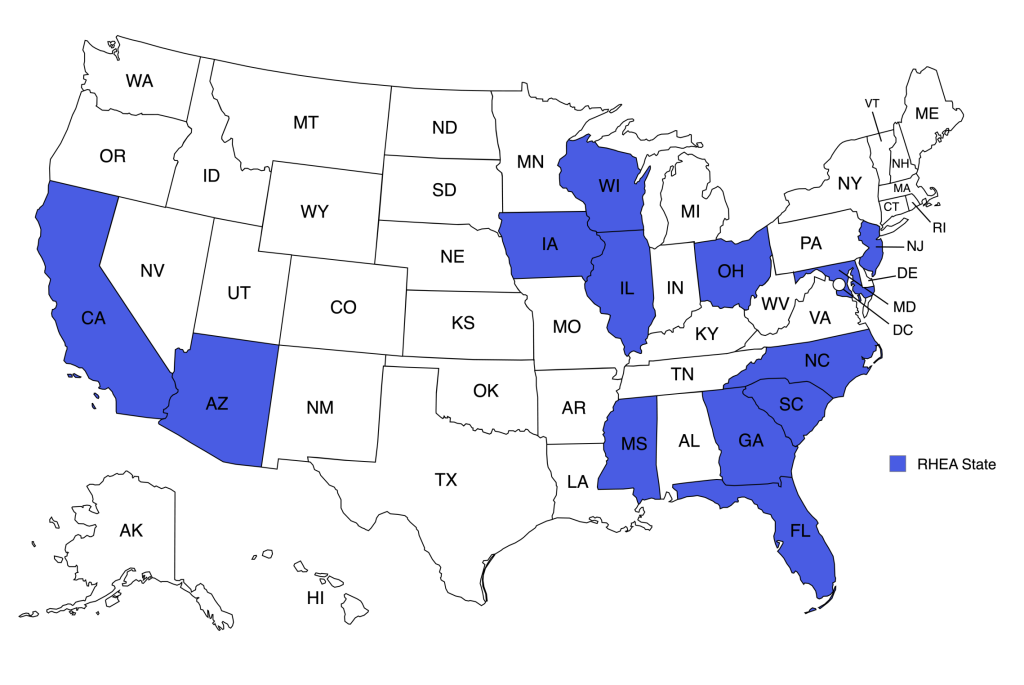
State Policy Backgrounds:
Abortion Access and Policies in Key States
Our partners at the Urban Institute generated state policy backgrounds to document abortion access and policies in key states as part of our collaborative project, the Reproductive Health Experiences and Access (RHEA) study.
View them here.
2025
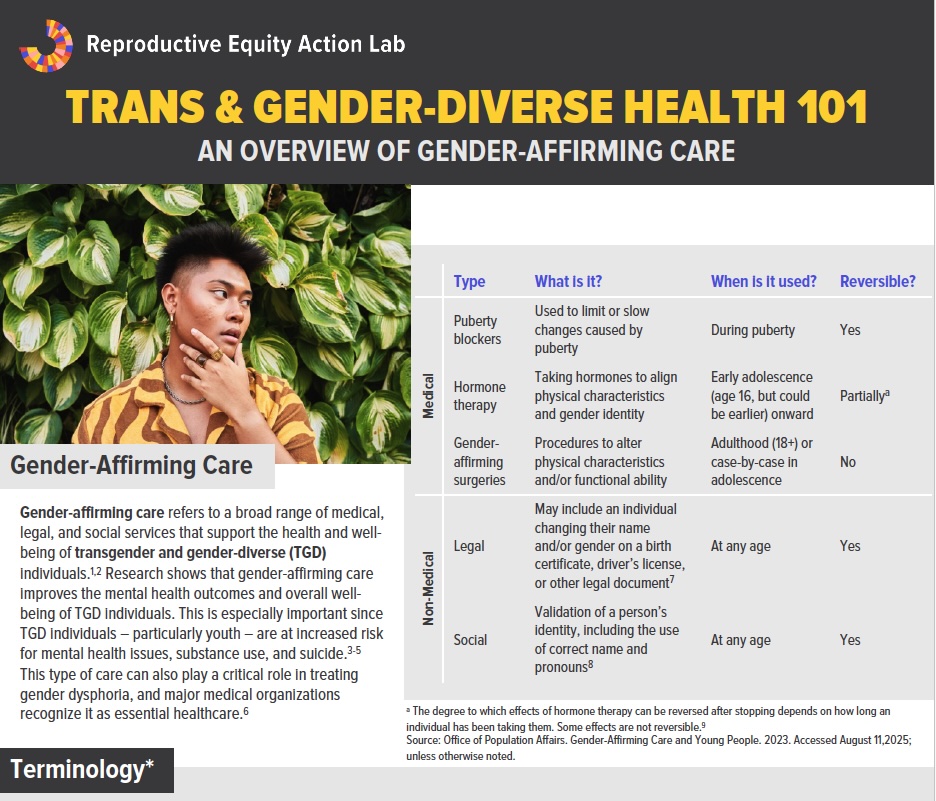
Trans and Gender-Diverse Health 101:
An Overview of Gender Affirming Care
Intended for a clinician audience, this resource was created by members of the Reproductive Equity Action Lab (Ellen Schenk, Brooke Whitfield, Klaira Lerma) with significant input from the community, including healthcare providers and lived-experience experts. This resource is available on Bedsider Provider.
2025
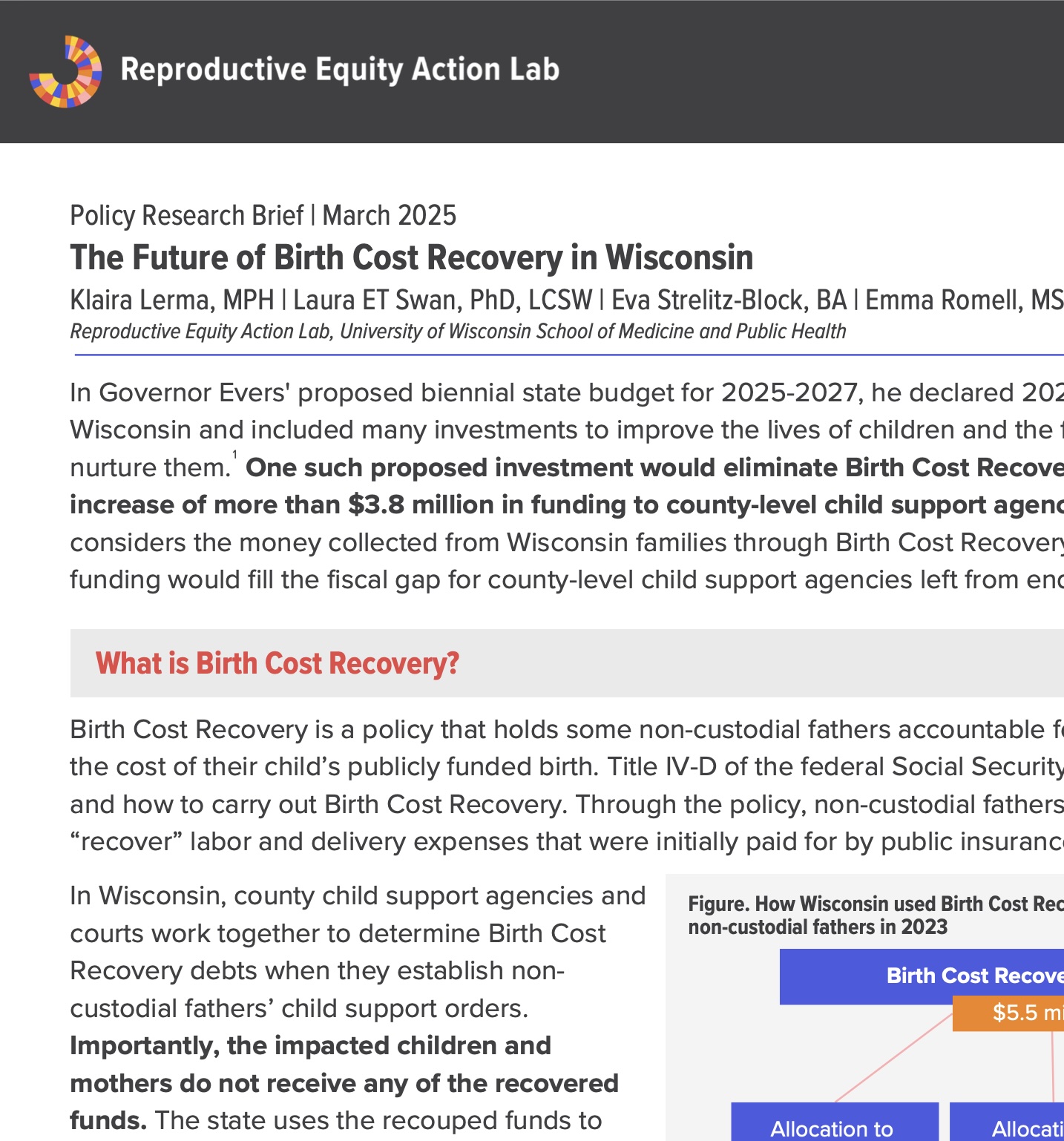
The Future of Birth Cost Recovery in Wisconsin
Intended for a general audience, this resource was created by members of the Reproductive Equity Action Lab (Klaira Lerma, Laura ET Swan, Eva Strelitz-Block, Emma Romell, Tiffany Green) with significant input from the community, including advocates and lived-experience experts. This brief was covered by the Wisconsin Examiner in April 2025.
Featured Abortion Publications

Adolescent and young adult requests for medication abortion through online telemedicine
REAL Author: Dana Johnson
Key Takeaways: This study analyzed data from a high‑volume online telemedicine service that provides medication abortion to minors. A substantial number of teenagers nationwide sought abortion pills online, with the highest weekly request rates in states requiring parental notification or consent. These patterns suggest that adolescents in such states face significant barriers to clinic‑based care, including the compounded effects of parental involvement laws and broader abortion restrictions. Findings highlight the need to better understand how legal and structural barriers shape teens’ access to confidential reproductive healthcare.

Race and ethnicity of reproductive-age females affected by US state abortion bans
REAL Author: Tiffany Green
Key Takeaways: This study highlights the racial disparities among reproductive-age people assigned female at birth affected by restrictive abortion policies following the 2022 Dobbs v. Jackson Women’s Health Organization Supreme Court decision. In states with abortion bans or severe restrictions, those who are Black and American Indian or Alaska Native are disproportionately represented compared to states with fewer restrictions. The findings underscore that abortion restrictions are concentrated in states with higher populations of racial minorities who already face elevated risks of pregnancy-related morbidity. Addressing disparities in reproductive health access may reduce adverse outcomes among these marginalized groups.
What Dobbs revealed about the everyday morality of abortion
REAL Author: Klaira Lerma
Chapter 2 in When Roe Fell: How Barriers, Inequities, and Systemic Failures of Justice in Abortion Became Visible. Recently covered in Ms. Magazine, read the article here.
Featured Contraception Publications

Adolescents’ and young adults’ receipt of person-centered contraceptive counseling
REAL Author: Brooke Whitfield
Key Takeaways: Are US adolescents and young adults receiving person-centered contraceptive counseling (PCCC), and is its receipt associated with use of a preferred method? In an analysis of 2,043 female respondents from the 2022–2023 National Survey of Family Growth, receipt of PCCC was low across all age groups. Adolescents aged 15–19 were significantly less likely to receive PCCC than adults aged 25 years and older. Overall, nearly two-thirds of adolescents did not receive PCCC, indicating that adolescents should be prioritized for person-centered contraceptive counseling in clinical practice.

“It should have been my decision”:
A mixed methods investigation of contraceptive coercion among US patients with and without disabilities
REAL Authors: Lindsay M. Cannon, Tiffany L. Green, Laura E.T. Swan
Key Takeaways: Researchers analyzed self‑reported data from US reproductive‑aged people assigned female at birth, focusing on participants’ disability status and their contraceptive care experiences. The analysis revealed that contraceptive coercion was more prevalent among respondents who self‑identified as disabled. These findings highlight the urgent need to advance disability‑informed reproductive justice.

Reasons for contraceptive and LARC non-use: How preferences and access barriers shape decisions
REAL Author: Laura E.T. Swan
Key Takeaways: Researchers examined reasons for contraceptive and LARC (long acting reversible contraception) non-use across four states. The findings indicate that personal preferences and individual needs, rather than structural barriers, are the primary factors influencing decisions not to use contraception. These results underscore the importance of respecting patient autonomy in contraceptive counseling.
Featured Racial Inequities Publications

Born on the wrong side of the tracks: Exploring the causal effects of segregation on infant health
REAL Authors: Tiffany L. Green, Laura E.T. Swan
Key Takeaways: This study examines the causal relationship between racial residential segregation and infant health outcomes in the U.S., using 19th-century railroad divisions as an instrumental variable. Findings reveal that segregation significantly worsens outcomes for Black infants, including higher risks of low birth weight, preterm birth, and restricted fetal growth. Mechanisms include reduced access to prenatal care, increased food insecurity, and heightened exposure to anti-Black prejudice. White infants were not similarly affected, highlighting segregation’s disproportionate burden on Black communities. These results underscore the role of structural racism in perpetuating health disparities and the need for targeted policy interventions.

The nature and validity of implicit bias training for health care providers and trainees: A systematic review
REAL Author: Tiffany L. Green
Key Takeaways: This systematic review evaluates 77 studies on implicit bias training for healthcare providers and trainees, highlighting significant gaps in methodology and effectiveness. Most trainings targeted racial/ethnic biases using a mix of didactic and hands-on approaches but often failed to define or address implicit stereotypes specifically. Despite increasing adoption, the review found little evidence that these programs result in long-term behavioral changes or improved patient outcomes. The findings emphasize the need for standardized, evidence-based designs, rigorous evaluations, and focus on measurable outcomes to ensure meaningful impacts on healthcare equity.

Implicit and explicit racial prejudice among medical professionals: Updated estimates from a population-based study
REAL Authors: Tiffany L. Green, Laura E.T. Swan
Key Takeaways: This study used data from Harvard’s Project Implicit to evaluate implicit and explicit racial prejudice among medical professionals. Results revealed higher levels of implicit anti-Black and anti-Arab-Muslim prejudice among physicians and non-physician healthcare workers compared to the general population. However, these differences diminished for physicians after controlling for demographics but remained significant for non-physician workers. The findings emphasize systemic racism’s role in healthcare disparities, urging targeted interventions to reduce prejudice and improve equity in patient care. These insights are critical for enhancing diversity, equity, and inclusion efforts in medical education and practice.
Featured Perinatal Publications

“It all starts by listening:” Medical racism in Black birthing narratives and community-identified suggestions for building trust in healthcare
REAL Author: Laura Swan
Key Takeaways: We interviewed 25 Black birthing people who participated in a local perinatal support group to understand their experiences with pregnancy, birth, and postpartum care, and to gather their ideas for improving trust in healthcare. Participants described facing medical racism, including provider bias and trauma, which contributed to deep distrust in the healthcare system. They proposed solutions for healthcare providers and the healthcare system, such as hiring more Black providers, listening to patients, practicing cultural humility, engaging in shared decision-making, building personal connections with patients, and spending more time with patients. These community-driven recommendations aim to build trust in healthcare and reshape how we combat racial disparities in healthcare provision and health outcomes.

Racial disparities in post-operative pain experience and treatment following cesarean birth
REAL Author: Tiffany Green
Key Takeaways: This study evaluated racial disparities in post-operative pain management following cesarean births, revealing that non-Hispanic Black and Hispanic birthing persons reported higher pain scores compared to non-Hispanic White counterparts. Despite higher pain levels, Black individuals did not receive increased opioid doses, while Hispanic birthing persons showed similar opioid use. Non-Hispanic Asian individuals reported comparable pain scores to Whites but received lower opioid doses. These disparities, persisting even after controlling for confounding factors, highlight inequities in pain management for birthing persons of color and underscore the need for equitable and patient-centered approaches in post-operative care.

Equitable artificial intelligence in obstetrics, maternal-fetal medicine, and neonatology
REAL Author: Tiffany Green
Key Takeaways: This article explores the potential of artificial intelligence (AI) to address disparities in obstetrics, maternal–fetal medicine, and neonatology. While AI promises to enhance diagnostic precision and clinical decision-making, biases in its design may perpetuate inequities. Key challenges include integrating diverse datasets, ensuring equity in AI tools, and avoiding the intensification of existing disparities. The authors advocate for multidisciplinary collaboration, ethical oversight, and community involvement to mitigate systemic biases. Equitable AI holds transformative potential for perinatal care but requires robust safeguards and continuous evaluation to ensure it supports marginalized populations effectively.
Featured Health Disparities Publications

The sexual experiences of people living with sickle cell disease
REAL Author: Brittanni Wright
Key Takeaways: This qualitative study explored how sickle cell disease (SCD) impacts individuals’ sexual experiences. Participants reported both satisfying sexual experiences and challenges due to pain crises or SCD-related genital pain. Communication with partners and managing pain are central to the sexual well-being of people with SCD. These findings highlight the need for clinicians to address sexual health and pain in SCD care.