Reproductive Health Experiences and Access (RHEA) Study

The US Supreme Court’s decision in Dobbs v. Jackson Women’s Health Organization (Dobbs) overturned the constitutional right to abortion in 2022.
The effects of this decision are likely far-reaching, but we don’t yet have the evidence to fully understand Dobbs’ impacts. Our research, which includes a national survey of more than 50,000 people and conversations with people directly affected, will fill this knowledge gap.
The Urban Institute, SisterSong Women of Color Reproductive Justice Collective, and our team at REAL are working together to rigorously assess how Dobbs has affected the broader reproductive health access and experiences, health outcomes, and social and economic well-being of women and other people who can get pregnant—especially for those from marginalized communities, who are likely disproportionately affected.
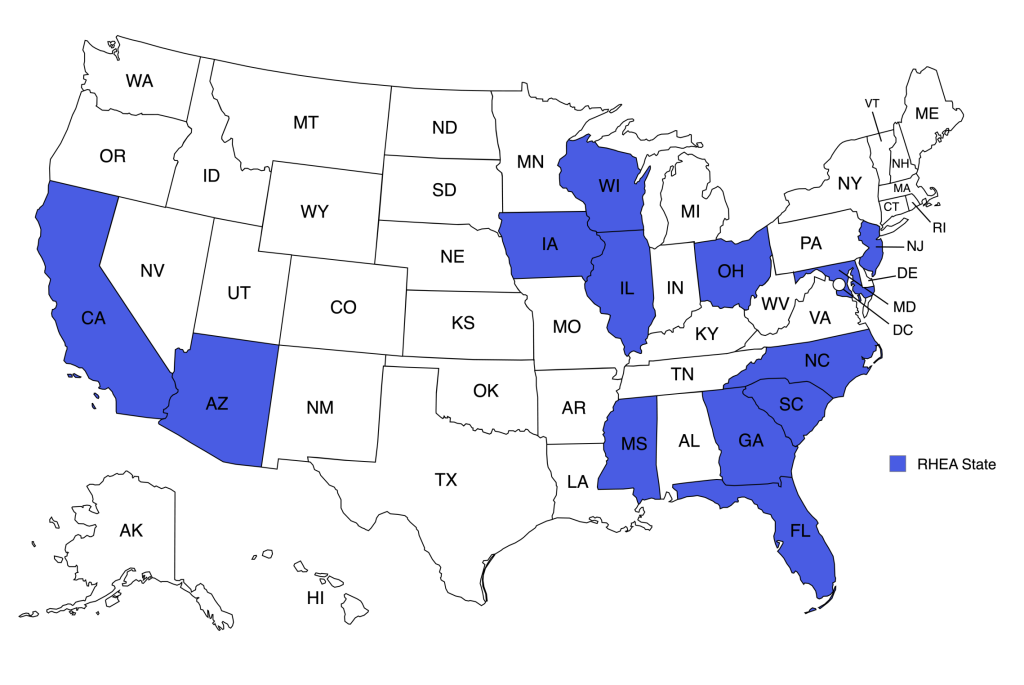
To capture state-level variation, our research will produce evidence of reproductive health access and experiences in 13 states (Arizona, California, Florida, Georgia, Iowa, Illinois, Maryland, Mississippi, North Carolina, New Jersey, Ohio, South Carolina, and Wisconsin) while centering on communities excluded from reproductive health research and policy conversations. These insights will complement our national-level findings.
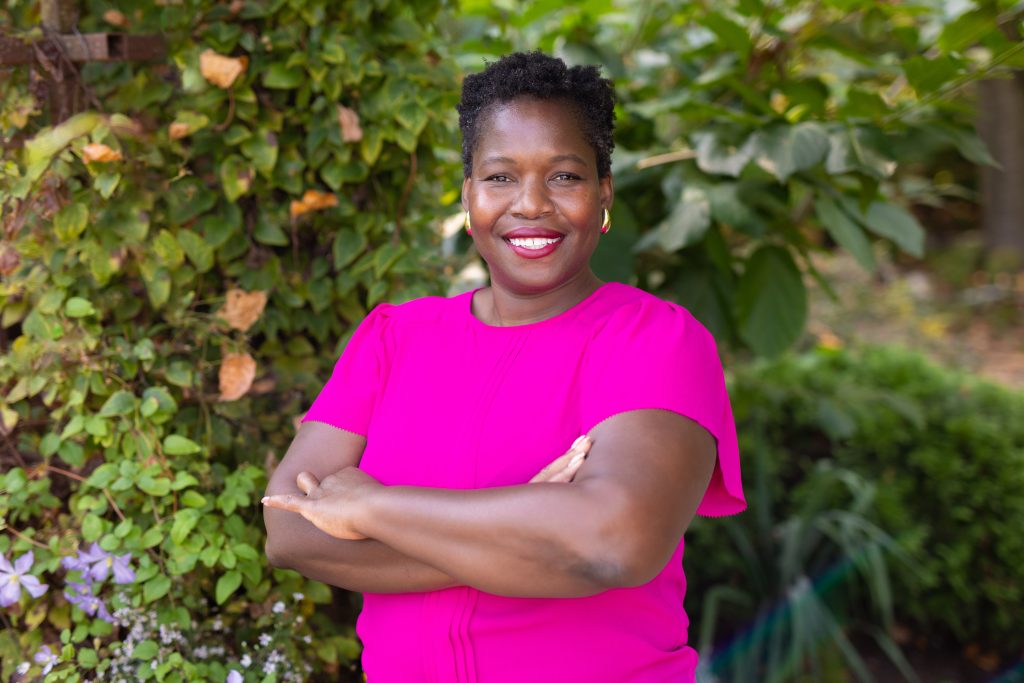
Co-Principal Investigator
Tiffany Green, PhD
Co-Principal Investigator
Emily M. Johnston, PhD
Urban Institute
Featured Publications

RHEA State Policy Backgrounds
Review Reproductive Health Experiences and Access in RHEA’s focal states. Backgrounds “snapshot” each state’s environment, including the present legal restrictions.

RHEA State Fact Sheets
How Does Access to Reproductive Health Care Vary Across States? Dulce Gonzalez and Emily M. Johnston led state-level fact sheets using the 2024-25 RHEA survey data

Editorial
RHEA collaborators (Laura E T Swan, Klaira Lerma, Lindsay M Cannon, Brooke Whitfield, Emily M Johnston, Megan L Kavanaugh) authored Measuring contraceptive use: challenges raised in recent survey research — drawing from the RHEA survey development experience
- American Public Health Association 2024, Reproductive health experiences and access survey: A study designed to assess contraceptive and abortion care (Post-Dobbs) in 13 focal states and the nation; Emily Johnston, PhD, Sarah Benatar, PhD, Tiffany Green, PhD, and Julia Long
Our Partners
The Urban Institute is a nonprofit research organization founded to create evidence-based solutions for social and economic policy issues. It provides research, data, and analysis to help decision-makers inform policies and programs related to topics like housing, health care, poverty, and immigration to improve people’s lives and strengthen communities. The organization is funded by foundations, corporate philanthropies, public agencies, and individuals, and it is committed to independence, rigor, and transparency in its work.

The RHEA study’s second Principal Investigator is Emily M. Johnston, PhD, Principal Research Associate in the Health Policy Division. Dr. Johnston leads a team at the Urban Institute who contribute meaningfully to the RHEA project and works closely with our team on a day-to-day basis, including: Emmy Burroughs, Dulce Gonzalez, Michael Karpman, Noah Kennedy, Genevieve M. Kenney, Matthew Pruitt, Laura Barrie Smith, Alaisha Verdeflor, and Doug Wissoker
SisterSong is a Southern based, national membership organization; their purpose is to build an effective network of individuals and organizations to improve institutional policies and systems that impact the reproductive lives of marginalized communities.
For the RHEA study, our team works closely with Noelle Elizabeth Spencer, PhD, MSc (Research Manager) and Nea Richard (Research Fellow) at SisterSong. Noelle and Nea lead the RHEA CAB and are valued members of the research team.
NORC at the University of Chicago is an independent, non-profit social science research organization that conducts research in the public interest for a wide range of government, foundation, and corporate clients. NORC is known for its rigorous methodology, high-quality data collection, and objective, non-partisan analysis on complex societal issues.

Our partners at NORC are critical partners in the RHEA project. They lead the recruitment and data collection, interacting directly with the people who take the survey.
Community Advisory Board
The Reproductive Health Experiences and Access (RHEA) Study’s Community Advisory Board (CAB)’s purpose is to ensure that communities’ opinions, insights, and experiences are centered in everything the RHEA study does. Dr. Noelle Spencer of SisterSong leads our RHEA CAB.
CAB members come from diverse backgrounds and represent communities across the US. CAB members work alongside the RHEA team across REAL, the Urban Institute, and SisterSong to provide their thoughts and opinions, ask questions, and engage in discussion about different phases of the research, from recruitment of participants to sharing study results.
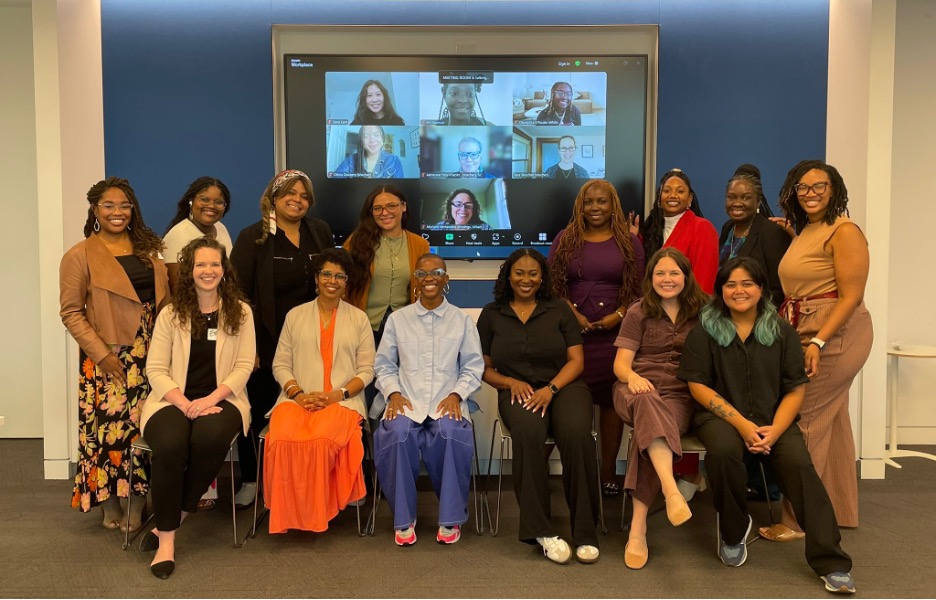
RHEA CAB and Project Team’s First Meeting (Fall 2024)
On Zoom (from top left to bottom right): Sara Lam (US), Joy Spencer (NC), Olymphia O’Neale White (Formerly AZ), Olivia Dockery (Formerly IL), Adrienne Troy-Frazier (SC), Tara Shochet (IA), Myriam Hernandez Jennings (Urban Institute). In person (back row from left to right): Noelle Elizabeth Spencer (SisterSong), Fhrynée Lambert (Formerly REAL), Eiko La Boria (NJ), Jordyn Close (OH), Zsanai Epps (MD), Larada Lee (CA), Courtney Hayward (WI), Nea Richards (SisterSong). In person (front row from left to right): Emily Johnston (Urban Institute), Asha Immanuelle (GA), Amanda Furdge (MS), Christy Altidor (FL), Klaira Lerma (REAL), Alaisha Verdeflor (Urban Institute). Not Pictured: Janie Mejias (US).
Current Community Advisory Board Members
We have 15 seats on our CAB, including one seat for each of the 13 RHEA states. Our recruitment process for the CAB centers on our ability to have representation of diverse identities.
| US | Janie Mejias, PhD | Manager of Movement Strengthening, Women Enabled International |
| US | Sara Lam | Future Leaders Fellow, Vote Run Lead |
| AZ | Frida Espinosa Cárdenas, PhD, MPH | Arizona State University |
| CA | Larada Lee | State Campaign Manager for Abortion Access, Advocates for Youth |
| FL | Christy Altidor, MPH, CPH | Director, Adolescent Health Policy, National Coalition of STD Directors |
| GA | Asha Immanuelle, MAS, BSN, PHM-C, RN | Maternal Health Equity Program Consultant, Center for Black Women’s Wellness |
| IA | Tara Shochet PhD, MPH | Director of Programs and Grants, Family Planning Council of Iowa |
| MS | Amanda Furdge-Shelby | Director of Youth Programs/ SM Database Manager at Children’s Defense Fund |
| MD | Zsanai Epps, DrPH, MPH, CHES | Senior Director, RJ Initiative, Black Women’s Health Imperative |
| IL | Elon Sloan | Independent Consultant |
| NC | Joy Spencer | Executive Director, Equity Before Birth |
| NJ | Eiko La Boria | Founder, The Flow Initiative |
| OH | Jordyn Close | Deputy Director, Ohio Women’s Alliance |
| SC | Adrienne Troy-Frazier, MA | Co-Founder, Connector, The BEE Collective |
| WI | Courtney S. Hayward, PhD, MPA | Executive Director, Wisconsin Community Action Program Association, Inc. (WISCAP) |
Research Status
Reproductive Health Experiences and Access (RHEA) Study
The RHEA study is designed to rigorously assess the impact of the Dobbs ruling on abortion and broader reproductive health access and experiences in the US, which differ drastically across states.
To capture this variation, our research produces evidence of reproductive health access and experiences in 13 states while centering on communities excluded from reproductive health research and policy conversations. These insights complement our national-level findings.
The 13 study states represent restrictive and protective reproductive health policy environments and a mix of geographies, racial and ethnic compositions, and political contexts. Seven states were previously studied in the Surveys of Women, allowing us to investigate changes.
Survey
A major component of the Reproductive Health Experiences and Access (RHEA) study is a national survey. The survey explores a wide range of topics around reproductive health–including experiences, attitudes, and preferences around contraception and abortion.
We designed the survey to hear from people who were assigned female at birth with any gender identity (such as woman, trans man, or non-binary) who are aged 18-49 years. Our partners at NORC helped us design a rigorous sampling strategy that will allow us to harness the data to understand differences between groups.
The first wave of the survey happened between 2024 and early 2025. More than 50,000 people participated in the survey! Our team is busy analyzing and interpreting the data!
In May 2026, the survey went back into the field again, to a new group of people aged 18-49 years and assigned female at birth. This is so we can measure changes over time. If you were invited to take the survey and have questions, please email RHEAsurvey@urban.org or visit the NORC website here.

Focus Groups & Interviews
Our study also includes follow-up interviews with some survey respondents, as well as interviews with policymakers, advocates, and providers and focus groups with people affected by recent changes in reproductive health and abortion access in each study state. If you were invited for an interview and have questions, please email RHEAsurvey@urban.org

Research Team
Additional research collaborators on the REAL team include Taehyun Kim, PhD and Amanda Nagle, MPH.
Frequently Asked Questions & Media Kit
If you were invited to take the survey and have questions, please email RHEAsurvey@urban.org or visit the NORC website here
What is the RHEA Study?
The Reproductive Health Experiences and Access (RHEA) Study is a multiyear assessment of reproductive health access, experiences, and preferences following the 2022 US Supreme Court decision in Dobbs v. Jackson Women’s Health Organization, especially among people facing barriers to care. For this study, the Urban Institute, the Reproductive Equity Action Lab at the University of Wisconsin–Madison, and SisterSong Women of Color Reproductive Justice Collective are collaborating to produce evidence-based research findings through a large national survey and qualitative data collection in 13 states.
How was this research conducted?
The Reproductive Health Experiences and Access (RHEA) study, which runs through 2027, includes a survey of more than 50,000 people, reflecting a national sample and 13 states (Arizona, California, Florida, Georgia, Iowa, Illinois, Maryland, Mississippi, North Carolina, New Jersey, Ohio, South Carolina, and Wisconsin). It also includes follow-up interviews with a small group of survey respondents, as well as interviews with policymakers, advocates, and providers and focus groups with people affected by recent changes in reproductive health and abortion access in each study state.
Why does this research matter?
In recent years, changes in federal and state policies have reshaped the reproductive health landscape, affecting where people can get care, what services are available, and how easy it is to find accurate information. This survey is the first of its kind since the Supreme Court’s decision in Dobbs v. Jackson Women’s Health Organization. Understanding whether and how people are facing challenges to accessing reproductive health care in the context of these changes will be key to mitigating health inequities and ensuring people get the care they want and need.
Email us for more information at RHEAsurvey@urban.org
If you a member of the media would like to speak to a REAL Researcher on the RHEA team, email us at reproequityactionlab@wisc.edu