Coercion in Contraceptive Care
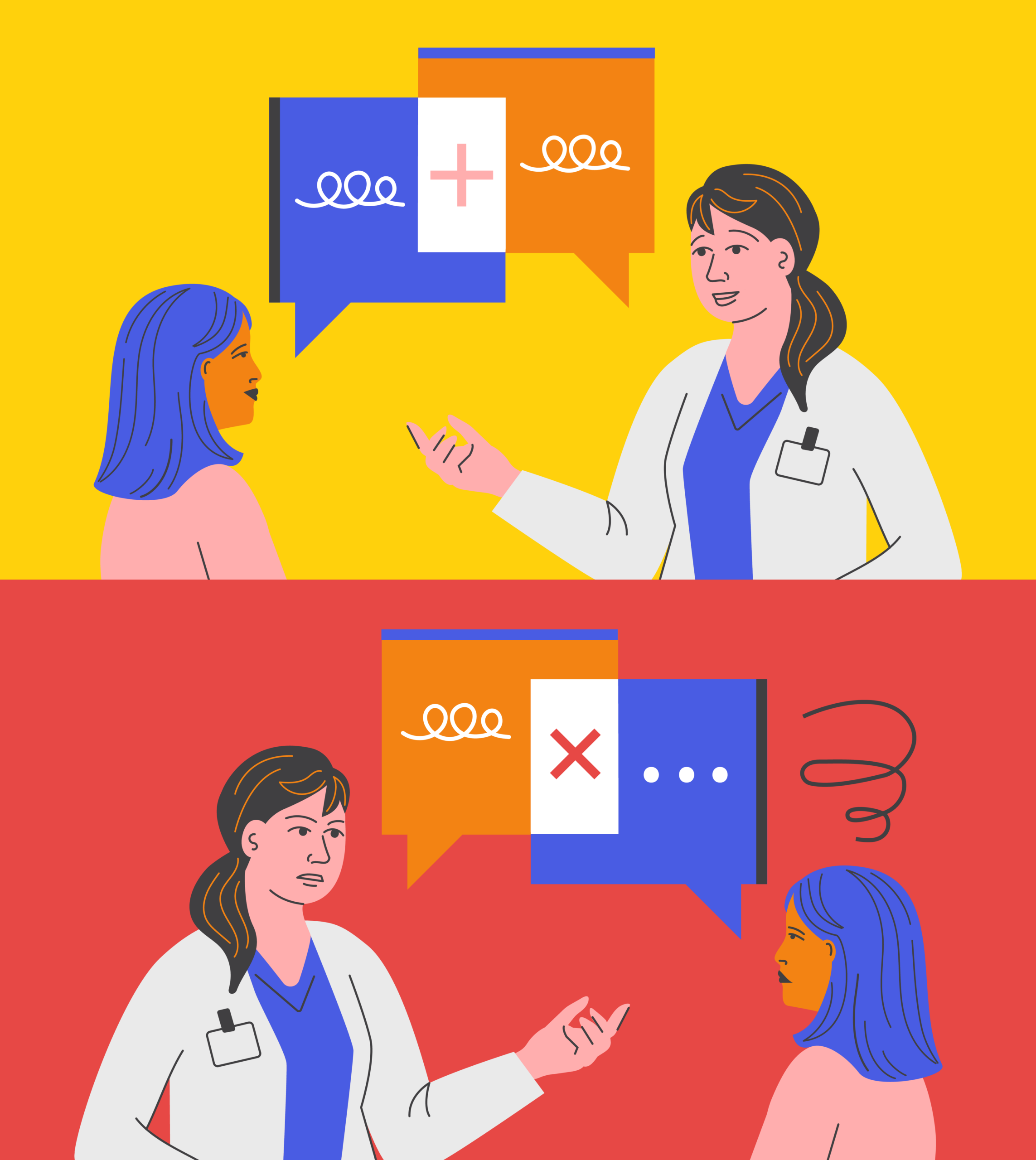
Contraceptive counseling is meant to help people make informed decisions about their reproductive lives. But sometimes healthcare encounters can leave patients feeling pressured toward a decision that does not reflect their preferences, needs, or goals.
The possibility of this pressure is shaped by a much larger history. Throughout U.S. history, reproductive policies and healthcare practices have often encouraged some groups to have children while discouraging others from doing so—particularly people facing racism, poverty, disability discrimination, and other forms of structural inequity.
At the Reproductive Equity Action Lab (REAL), we study clinical contraceptive coercion—how it occurs, who is most affected, how it impacts people’s lives, and what can be done to ensure contraceptive care truly supports reproductive autonomy.
What is Clinical Contraceptive Coercion?
Contraceptive coercion occurs when a person feels pressured, manipulated, or steered toward a contraceptive decision that does not align with their goals and preferences. Put simply, it happens when someone else’s priorities take precedence over a person’s own reproductive choices.
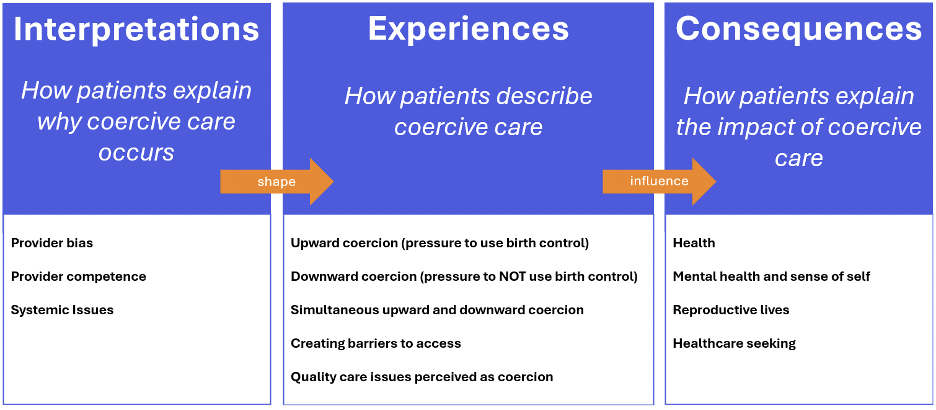
Some people experience upward contraceptive coercion, or pressure to use birth control. Others experience downward contraceptive coercion, or pressure not to use birth control. This can take many forms—from feeling pushed toward a specific method to having concerns dismissed, receiving incomplete information, or feeling judged for one’s decisions.

Coercion can happen in all sorts of relationships, including with parents or intimate partners. Clinical contraceptive coercion refers to pressure from a healthcare provider.

What Have We Learned?
To better understand clinical contraceptive coercion, REAL Senior Research Scientist Dr. Laura Swan developed one of the first tools specifically designed to measure it: the Coercion in Contraceptive Care Checklist. In 2023, we pilot-tested the Checklist in a national survey of reproductive-aged people assigned female at birth.
We found that clinical contraceptive coercion is far more common than many people realize:
- More than 1 in 6 people reported experiencing contraceptive coercion during their most recent contraceptive counseling visit.
- More than 1 in 3 people reported experiencing contraceptive coercion at some point in their lifetime.
- Pressure to use contraception was much more common than pressure not to use it. This pattern may reflect healthcare and public health priorities that strongly emphasize pregnancy prevention and highly effective contraceptive methods.

Clinical contraceptive coercion was more common among groups with less social power, including young adults, racial/ethnic minorities, sexual minorities, and people with disabilities.
These experiences have meaningful consequences.
- Participants described coercive encounters as “traumatic” and said they left them feeling “hopeless, ignored, and frustrated” or as though they lacked control over decisions about their own bodies.
- After experiencing coercion, many participants reported avoiding healthcare altogether or searching for providers who better respect their reproductive preferences.
- People who experienced clinical contraceptive coercion were less likely to be using their preferred contraceptive method.
- People who experienced clinical contraceptive coercion reported poorer mental health and well-being.

Our research also suggests that pressure on reproductive decision-making extends beyond the healthcare setting. Social, legal, and political forces can work together to shape, constrain, or influence people’s reproductive choices. Our team refers to these broader pressures as sociolegal reproductive coercion.
Looking Ahead
The reproductive healthcare landscape is changing rapidly, and so is our research.
We are currently working on several projects that will deepen our understanding of clinical contraceptive coercion and help identify solutions:
1. Improving Measurement. We have refined the Coercion in Contraceptive Care Checklist using feedback from research participants, community members, and experts. The updated tool will be available soon.
2. Understanding Prevalence. We are analyzing nationally representative data from our RHEA study to better understand how common clinical contraceptive coercion is nationwide and which groups are most affected.

3. Examining a Changing Policy Landscape. Through in-depth interviews with patients and healthcare providers, we are exploring how abortion restrictions, changes in reproductive health policy, and reductions in family planning resources are shaping contraceptive care and decision-making today.
4. Identifying Solutions. We are partnering with healthcare providers to understand what changes—at the provider, clinic, and healthcare system levels—could help prevent clinical contraceptive coercion and support truly patient-centered care.
Ultimately, our goal is not simply to document clinical contraceptive coercion—it is to help end it. Guided by principles of reproductive justice, we are working to identify the practices, policies, and structural changes that support genuine reproductive autonomy. By centering the experiences of those most affected by inequities, we hope to help create contraceptive care that is respectful, equitable, and responsive to people’s goals and values.
Featured Publications
Building Theory from Patient Narratives: A Framework for Understanding Clinical Contraceptive Coercion in the U.S.
Laura Swan, Lindsay Cannon, Madison Lands, and Klaira Lerma draw from patient narratives to develop a patient-centered theoretical framework of clinical contraceptive coercion, explaining coercion as multifaceted, relational, systemic, and deeply consequential.
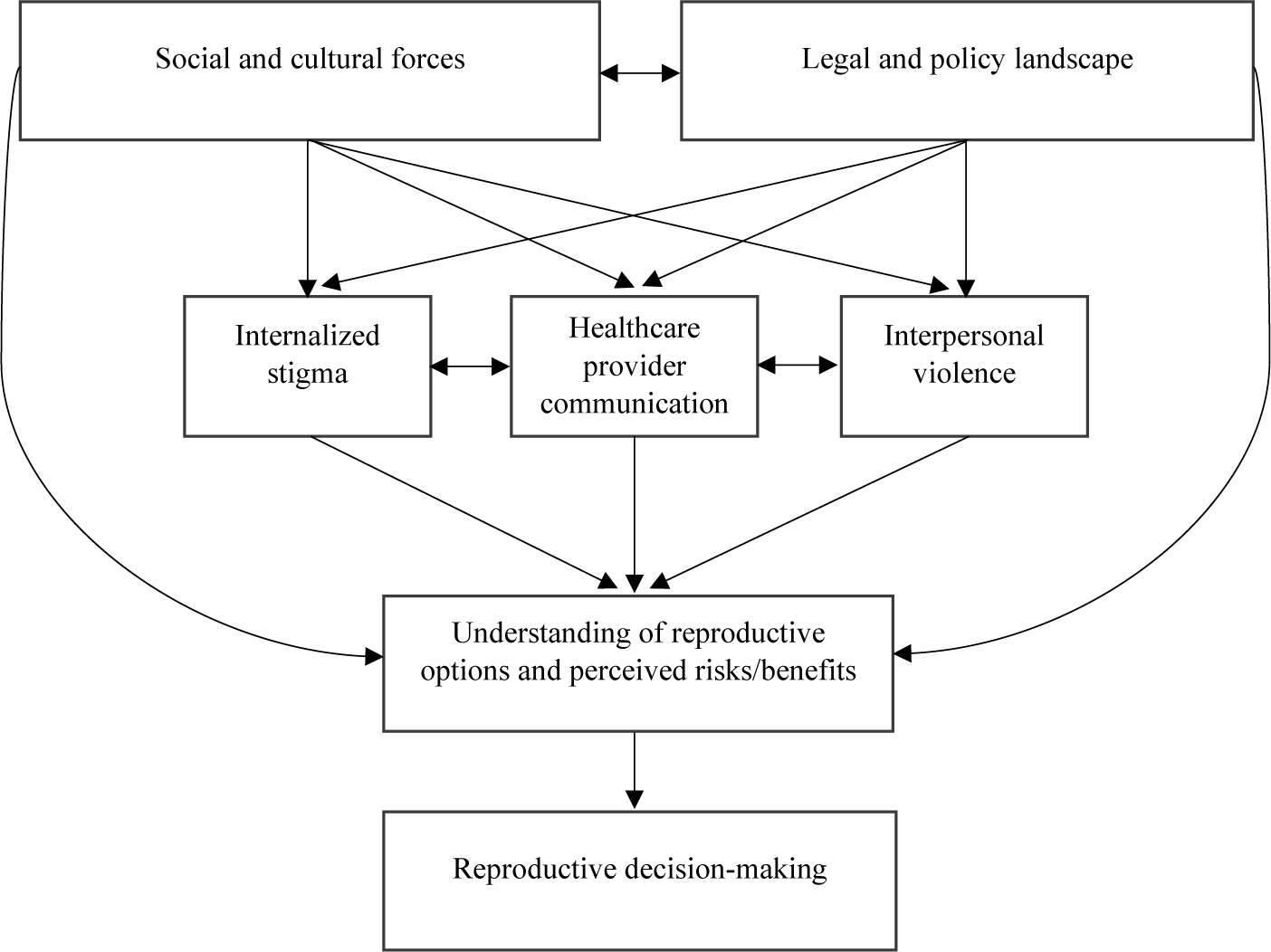
Sociolegal Reproductive Coercion: A Framework for Understanding Structural Pressures on Reproductive Decision-Making
Laura E. T. Swan, Klaira Lerma, Lindsay M. Cannon and Fran Linkin introduce the concept of sociolegal reproductive coercion to explain how laws and policies shape reproductive decision‑making in the Journal of Law, Medicine & Ethics.
“It should have been my decision”: A mixed methods investigation of contraceptive coercion among US patients with and without disabilities
Lindsay Cannon, Tiffany Green, Meaghan Bethea, and Laura Swan examine differences in contraceptive coercion by disability status, adding nuance through open-ended quotes about how coercion functions for people with disabilities.

Research Team
Additional research collaborators include:
- Lindsay Cannon, PhD, MPH, MSW, Assistant Professor, Florida State University
- Yulissa Rodriguez-Hernandez, MPH, Medical student, UW–Madison
- Morgan White, MD, Assistant Professor, UW–Madison
- Shelby E. McDonald, PhD, MSW, Endowed Professor, University of Tennessee, Knoxville